


Introduction In molecular biology, chemistry, and drug discovery, the term ligand appears everywhere. A ligand is commonly defined as a molecule—often a peptide—that binds specifically and reversibly to a biological target, such as a receptor, enzyme, or ion channel. This binding event can trigger downstream biological effects, regulate cellular pathways, or act as a signal for further molecular interactions. Understanding ligands is crucial for fields like pharmacology, biotechnology, diagnostics, and protein engineering, making the concept a cornerstone of modern life science knowledge. 1. The Core Definition of a Ligand A ligand is a molecule capable of forming a stable complex by binding to a specific site on a target, typically a biomolecule such as a protein. While ligands vary widely in structure, peptides are frequently used due to their versatility, specificity, and ease of engineering. Key Features: Specificity: A ligand binds only to a particular molecular site, similar to a lock-and-key mechanism. Reversibility: Many ligand–target interactions are non-covalent and reversible, allowing dynamic biological regulation. Functionality: Binding can activate, inhibit, stabilize, or signal biological processes. 2. Peptide Ligands: Why They Matter Peptides are short chains of amino acids that naturally fold into shapes favorable…
In biological and biomedical sciences, the term “target” refers to a specific molecule or structure within a living system that researchers aim to observe, influence, or regulate. Although often discussed in the context of drug discovery, targets extend far beyond that domain and include proteins, receptors, enzymes, nucleic acids, and even cell-surface markers that influence physiological and pathological processes. Understanding how targets function provides essential insight into cellular signaling, disease mechanisms, and therapeutic innovation. 1. What Is a Biological Target? A biological target is any molecular entity that participates in a measurable biological activity. It may act as a signal transmitter, structural component, metabolic regulator, or interaction hub within a biochemical pathway. Researchers identify and characterize targets to understand how biological responses are initiated and how they can be modulated to achieve desired outcomes. Common categories of targets include: Proteins – structural proteins, transport proteins, transcription factors Receptors – membrane-bound or intracellular sensors that respond to chemical signals Enzymes – catalysts that regulate metabolic reactions Cell surface markers – characteristic molecules on the external cell membrane used to identify and classify cell types Ion channels – regulators of cellular electrical activity Nucleic acids – DNA or RNA sequences involved…
Amino acids are essential organic molecules that serve as the primary building blocks of peptides and proteins—structures at the core of nearly every biological process. Their unique chemical properties allow them to assemble into countless configurations, enabling life to grow, repair, and operate with extraordinary precision. What Are Amino Acids? Amino acids are small, nitrogen-containing compounds composed of an amino group, a carboxyl group, and a distinct side chain. This side chain—also called the R-group—defines each amino acid’s characteristics, dictating how it interacts with others and influencing the structure of peptides and proteins. Amino Acids as the Basis of Peptides Peptides form when amino acids link together through peptide bonds. This occurs via a condensation reaction, where the carboxyl group of one amino acid connects to the amino group of another. As more amino acids join the chain, they develop into polypeptides, which eventually fold into complex, three-dimensional protein structures. These proteins then serve roles in catalysis, structure, signaling, immunity, and metabolism. Types of Amino Acids Amino acids can be classified into several categories based on their chemical characteristics: Essential amino acids: Cannot be synthesized by the body and must be obtained through diet. Non-essential amino acids:…
The One-Bead-One-Compound (OBOC) Library technique is a powerful combinatorial chemistry strategy used to generate vast molecular libraries for screening and discovery. By anchoring a single, unique compound onto each solid bead, researchers can rapidly explore structural diversity across peptides, peptidomimetics, small molecules, and other bioactive scaffolds. This method has become instrumental in drug discovery, diagnostics, biomolecular engineering, and materials science due to its scalability and efficiency. What Is an OBOC Library? An OBOC library is a collection of beads—typically made of resin or polymer—where each bead carries millions of copies of the same compound. The core idea is that every bead is a microreactor that produces one unique molecular variant. This allows researchers to screen thousands to millions of compounds simultaneously while maintaining clarity on bead-specific identities. The OBOC method was designed to overcome the limitations of traditional combinatorial chemistry, offering a route for high-throughput synthesis without the need for separate reaction vessels for each individual compound. How OBOC Libraries Are Constructed The construction of an OBOC library usually follows a split–mix synthesis approach: Starting Material Distribution Beads are split into multiple reaction vessels. Chemical Coupling Different building blocks (such as amino acids) are coupled to…
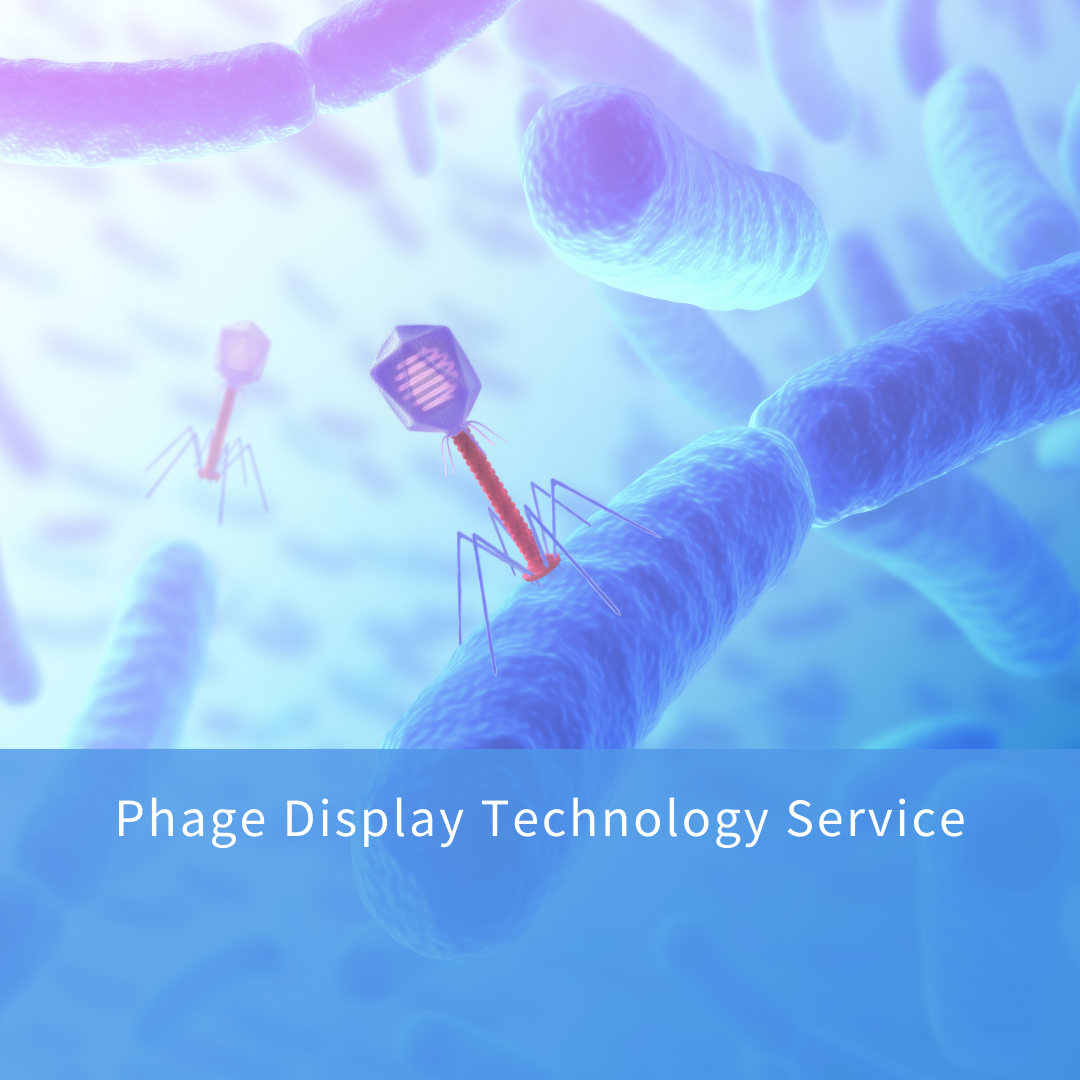
Phage display peptide libraries are powerful molecular tools that enable scientists to explore the interactions between peptides and biological targets with exceptional precision. Originating from the fusion of molecular biology and protein engineering, this technique uses bacteriophages—viruses that infect bacteria—to present millions to billions of peptide variants on their surface. By screening these large libraries, researchers can identify peptides with high affinity and selectivity for specific molecules, cells, or receptors. What Is a Phage Display Peptide Library? A phage display peptide library is a collection of bacteriophages genetically engineered to express diverse peptide sequences on their surface proteins, typically on the filamentous phage coat protein pIII or pVIII. Each phage displays a unique peptide, while simultaneously carrying the DNA that encodes that peptide. This one-to-one genotype-phenotype linkage allows researchers to rapidly identify peptide candidates by recovering the phage DNA after selection. How Phage Display Works The core principle of phage display centers on biopanning, a multi-step selection process: Library Exposure – A large peptide library is introduced to a target of interest, such as a protein, antibody, receptor, or cell surface. Binding and Washing – Peptides that bind to the target remain attached, while weak or non-binding phages…
A peptide library is one of the most powerful resources in molecular biology, drug discovery, and biochemical research. It consists of a large collection of peptides—each with distinct sequences—designed to probe biological targets, identify binding interactions, and accelerate the discovery of functional molecules. As scientific research and pharmaceutical innovation increasingly rely on high-throughput techniques, peptide libraries have become central to understanding protein interactions, enzyme specificity, and therapeutic candidate selection. ⸻ What Is a Peptide Library? A peptide library is a structured set of diverse peptides with systematically varied amino-acid sequences. These peptides are synthesized or expressed in large numbers to explore how different sequences interact with a biological target. Because proteins and enzymes recognize molecules based on their structure and sequence, peptide libraries provide a versatile platform to map these interactions efficiently. Unlike single-peptide investigations, libraries allow the simultaneous evaluation of thousands to millions of peptide variants. This significantly reduces the time required to identify high-affinity binders, active sequences, or inhibitory motifs. ⸻ How Peptide Libraries Are Constructed 1. Solid-Phase Peptide Synthesis (SPPS) Most artificial peptide libraries rely on SPPS, which builds peptides one amino acid at a time. By varying the added amino acids in each step, researchers generate…
Peptide Research Tuscaloosa: High-Purity Custom Peptide Solutions from a China-Based Supplier Serving the USA Peptide research continues to play a central role in biomedical innovation, drug discovery, immunology, diagnostics, and academic biochemistry. In the Tuscaloosa research community—home to growing biotechnology programs, CRO collaborations, and university-driven life-science studies—scientists require reliable and reproducible peptide materials that meet strict purity and analytical standards. KMD Bioscience (selexkmdbio.com) is a China-based peptide synthesis factory and global supplier, providing high-purity research peptides to clients in Tuscaloosa, Alabama, and across the United States. While not locally manufactured in the USA, KMD Bioscience delivers scalable, cost-effective peptide production supported by advanced synthesis technologies and rigorous quality control. This article provides an original, search-optimized overview of peptide applications, product advantages, typical specifications, and why many U.S. laboratories choose international suppliers for research-grade peptides. ⸻ Why Peptide Research Matters in the USA and Tuscaloosa Researchers in Tuscaloosa use peptides across a wide spectrum of applications: 1. Drug Discovery & Therapeutic Development Peptides are attractive drug candidates due to their: •high specificity to molecular receptors •predictable pharmacodynamics •reduced toxicity compared with small molecules Custom peptides allow researchers to explore lead compounds, enzyme substrates, cell-penetrating sequences, and bioactive analogues. 2. Immunology &…

Peptide Synthesis Services Mobile, USA – High-Purity Custom Peptides from China-Based Supplier KMDBioScience Introduction Researchers, biotech companies, and pharmaceutical developers in Mobile, Alabama increasingly rely on premium-grade synthetic peptides for discovery, diagnostics, and therapeutic development. As demand for purity, rapid delivery, and competitive pricing continues to rise, KMDBioScience (China-based factory & supplier) delivers high-quality Custom Peptide Synthesis Services to laboratories and enterprises across the USA, including Mobile and the broader Gulf Coast region. KMDBioScience is not located in the USA. All production is performed in China, and the company exports directly to American customers with strict quality control, global-standard purification technologies, and dedicated support for US-based research workflows. ⸻ Why Peptide Synthesis Matters for U.S. Research Peptides are essential tools across multiple scientific and medical fields. American laboratories use synthetic peptides for: • Drug discovery and lead development High-purity peptides enable accurate screening, target validation, binding studies, and preclinical evaluation. • Diagnostics & biomarker research Custom peptide antigens support antibody generation, epitope mapping, and clinical diagnostic panel development. • Immunology & vaccine design Synthetic peptides allow rapid testing of immunogenic sequences and T-cell epitope engineering. • Proteomics & mass spectrometry Stable, purity-verified peptides are ideal internal standards for quantitative proteomics.…

Peptides Mobile Supplier for USA Laboratories – Quality from a China-Based Factory Peptides Mobile is becoming a preferred solution for research institutes, biotech companies, pharmaceutical developers, and academic laboratories seeking stable, high-purity peptide materials with flexible customization options. As a China-based manufacturing and supply factory, KMDBioScience.org provides direct peptide production services to customers across the United States, delivering consistent quality, cost-efficient production, and fast global shipping without implying local U.S. manufacturing. What Is Peptides Mobile? Peptides Mobile refers to a broad portfolio of ready-to-apply research peptides designed for rapid integration into laboratory workflows. These peptides support diverse scientific fields, including: •Drug discovery and screening •Cell signaling and receptor interaction studies •Immunology and vaccine development •Protein engineering and structural biology •Diagnostic reagent production The term “mobile” highlights the peptides’ versatility, stability, and ease of transport, allowing research teams to store, handle, and apply them efficiently across multiple experimental platforms. Advantages of Choosing Peptides Mobile from KMDBioScience.org KMDBioScience.org has developed a strong reputation as a Chinese peptide manufacturer supplying the U.S. market through optimized synthesis technology and strict quality control. Key strengths include: 1. High Purity with Advanced Analytical Verification Each peptide undergoes full QC testing such as HPLC, MS, purity verification,…

Custom Peptide Synthesis Montgomery – High-Purity Research Peptides from China-Based KMDBioscience Research institutions, biotechnology labs, and pharmaceutical developers in Montgomery, Alabama increasingly rely on high-purity custom peptides for drug discovery, immunology studies, diagnostics development, and biochemical research. While many labs search locally, the most cost-efficient and technically advanced synthesis capabilities often come from global peptide manufacturing experts. KMDBioscience.org is a China-based peptide synthesis factory and supplier, offering reliable service and international export support for customers in Montgomery and the broader USA market. Our factory is not located in the United States; instead, we provide direct manufacturing-to-customer service, ensuring high-quality peptides at competitive prices without intermediaries. ⸻ Why Montgomery Researchers Choose KMDBioscience for Custom Peptide Synthesis 1. Factory-Level Pricing from a Global Supplier As a direct Chinese manufacturer, KMDBioscience provides custom peptide synthesis without the inflated costs of local distributors. Montgomery labs benefit from transparent quotes, scalable batch production, and consistent quality control aligned with international standards. 2. High Purity Levels for Demanding Scientific Applications KMDBioscience produces peptides ranging from crude grade to >98% purity, supporting: •Immunological assays •Enzyme studies •Epitope mapping •Cell signaling research •Antibody production •Pharmaceutical R&D Each batch undergoes strict analysis with HPLC and MS verification to ensure…