

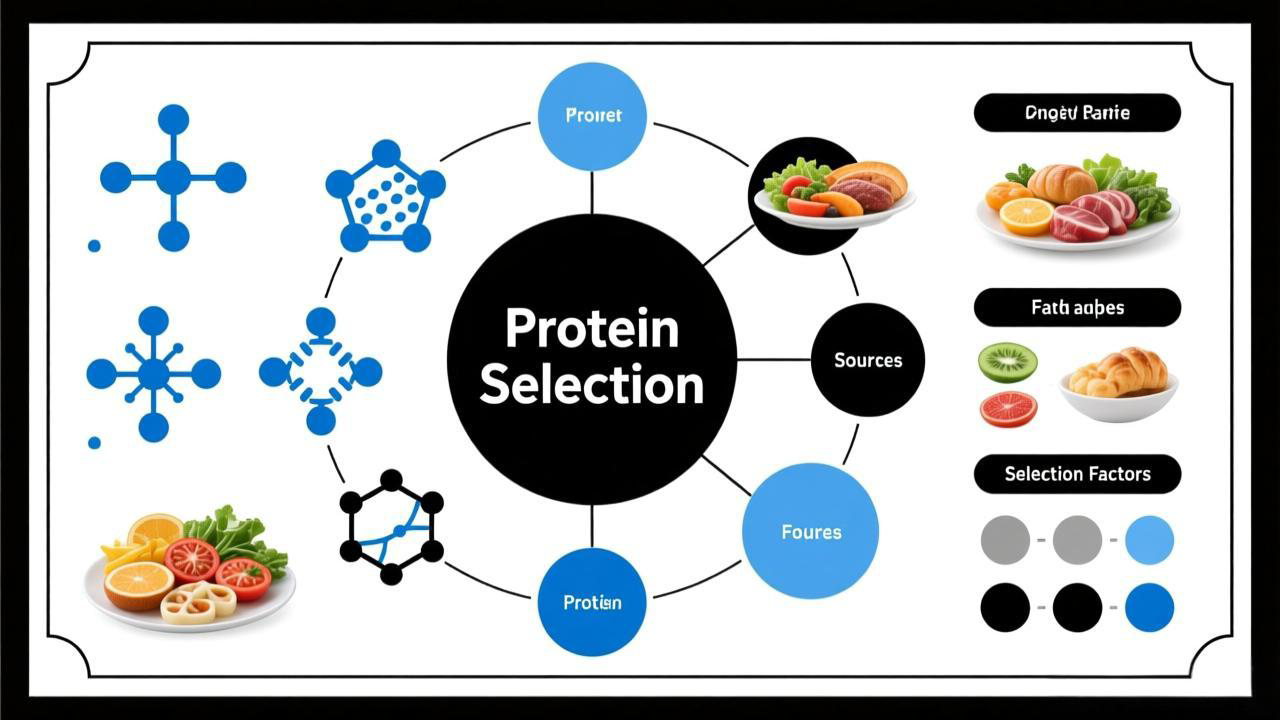
What are Peptide Screening Services? These are specialized contract research services offered by biotech companies and CROs (Contract Research Organizations) to discover, optimize, or validate peptide-based molecules for various applications. They provide the expertise, libraries, and high-throughput technologies to efficiently identify peptide hits from vast molecular collections. Core Types of Peptide Screening Services 1. Library-Based Screening This is the most common starting point for discovery. Synthetic Peptide Libraries: Collections of thousands to millions of chemically synthesized peptides. Positional Scanning Libraries: For epitope mapping or identifying key amino acid residues. Truncation & Alanine Scanning: To find the minimal active sequence and critical residues. Phage Display Libraries: The largest and most diverse format (up to 10^11 unique sequences). A library of bacteriophages, each displaying a unique peptide on its coat protein, is panned against a target (e.g., a protein, cell). mRNA/Ribosome Display Libraries: Cell-free systems that link the peptide to its encoding mRNA, allowing for even larger libraries and easier mutagenesis. 2. Functional & Application-Specific Screening Services are tailored to the desired peptide function: Target-Based Screening: Against purified proteins (e.g., enzymes, receptors, GPCRs, protein-protein interaction interfaces). Cell-Based Screening: For peptides that modulate cell signaling, internalize into cells (CPPs), or have antimicrobial (AMP) or anticancer activity. Antigen/Antibody Screening: For epitope mapping, vaccine development,…
Think of it as a sophisticated, high-throughput search and test process. Instead of you building and running every experiment in your own lab, you outsource the initial heavy lifting to experts with specialized libraries and automated systems. Here’s a detailed breakdown: Core Concept The goal is to sift through vast collections (libraries) of peptides—short chains of amino acids—to find the few that bind to a specific target (like a protein, receptor, or cell), catalyze a reaction, or exhibit a desired function (e.g., antimicrobial activity). Key Components of Peptide Screening Services Peptide Libraries: Synthetic Libraries: Collections of thousands to millions of chemically synthesized peptides. They can be diverse (random sequences) or focused (based on a known protein family or structure). Phage Display / Yeast Display Libraries: Genetic libraries where each peptide is displayed on the surface of a virus (phage) or yeast cell, with its DNA sequence inside. This allows for easy amplification and sequencing of "hits." Screening Assays (The "How"): Binding Screens: The most common. Immobilize your target and see which peptides from the library stick to it. Techniques include ELISA, surface plasmon resonance (SPR), and biopanning (for phage display). Functional Screens: Test for a biological effect, like enzyme inhibition, antimicrobial killing, or cell penetration. High-Throughput Screening (HTS): Automated…

Aptamers are short single-stranded DNA or RNA molecules that fold into 3D structures capable of binding targets (proteins, small molecules, cells, or even complex particles) with high specificity and affinity. “Aptamer methods” usually refers to the full pipeline: library design → selection (SELEX) → enrichment monitoring → sequencing & bioinformatics → candidate optimization → biophysical/functional validation → stability engineering. Modern platforms improve speed and hit quality by combining smarter selection pressures with microfluidics and next-generation sequencing. 1) Core Aptamer Selection Method: SELEX (Systematic Evolution of Ligands by EXponential Enrichment) 1.1 Classical SELEX workflow (baseline method) Start with a random oligonucleotide library (often 10^13–10^15 unique sequences) Incubate library with the target Partition bound vs unbound sequences Elute binders Amplify (PCR for DNA; RT-PCR + transcription for RNA) Repeat iterative rounds with increasing stringency until enrichment is achieved Why it works: each round increases the fraction of sequences that can bind under the imposed conditions (buffer, temperature, competitor molecules, etc.). Why it’s hard: classical SELEX can be slow, labor intensive, and prone to amplification bias—hence the rise of “advanced SELEX” platforms. 1.2 “Stringency engineering” (how you make aptamers useful) Selection success often depends less on the target itself…
Isothermal Titration Calorimetry (ITC) binding services help researchers quantify molecular interactions directly in solution by measuring the heat released or absorbed during binding events. Unlike many indirect binding assays, ITC is label-free and can report multiple thermodynamic parameters in a single experiment—most notably binding affinity (Kd/Ka), stoichiometry (n), and enthalpy (ΔH), with entropy (ΔS) and free energy (ΔG) derived from the measured values. What ITC Measures (and Why It’s Different) At its core, ITC measures heat. When a ligand is titrated into a cell containing a binding partner (commonly a protein), each injection generates a heat signal proportional to how much binding occurs at that point in the titration. From the full binding isotherm, ITC can determine: Binding affinity: Kd (or Ka) Stoichiometry: n (how many ligand molecules bind per macromolecule, or binding-site equivalents) Enthalpy change: ΔH (measured directly) Gibbs free energy: ΔG (derived) Entropy contribution: ΔS (derived via ΔG = ΔH − TΔS) This combination matters because two interactions with the same Kd can be driven by very different physics—electrostatics/hydrogen bonding vs. hydrophobic effects, for example—often reflected in different ΔH and ΔS balances. What “ITC Binding Services” Typically Include While providers vary, ITC binding…
What “Affinity Determination” Means Affinity determination is the process of quantifying how strongly two molecules bind to each other—commonly protein–protein, antibody–antigen, receptor–ligand, or protein–small molecule interactions. In most bioscience and drug discovery contexts, affinity is summarized by the equilibrium dissociation constant (KD): Lower KD = higher affinity (tighter binding). KD is an equilibrium quantity, meaning it reflects the balance between binding and unbinding at steady state. A related way to express the same concept is the association constant (KA), where KA = 1 / KD. The Core Parameters: KD, KA, kon, koff Affinity can be described in two complementary ways: 1) Equilibrium view (how much binds at steady state) KD (M): concentration at which half of binding sites are occupied in a simple 1:1 interaction model. KA (M⁻¹): binding strength as an association constant (inverse of KD). 2) Kinetic view (how fast binding happens) Many instruments determine affinity by measuring rates: kon (M⁻¹·s⁻¹): association/on-rate (how quickly complex forms) koff (s⁻¹): dissociation/off-rate (how quickly complex falls apart) For a 1:1 interaction: KD = koff / kon (at equilibrium). Surface-based biosensors often estimate affinity by extracting these rates from real-time binding curves. Why Affinity Determination…
CUSTOM APTAMER DISCOVERY & DEVELOPMENT is the process of creating target-specific single-stranded DNA or RNA aptamers—short nucleic acids that fold into 3D shapes capable of binding proteins, small molecules, cells, vesicles, or other targets with antibody-like selectivity. Most custom programs rely on SELEX (Systematic Evolution of Ligands by EXponential enrichment), then refine “hits” into robust, application-ready binders through sequencing-driven analysis and post-selection optimization. 1) What Aptamers Are (and Why They’re Used) Aptamers are typically ~15–90 nucleotides long and can be engineered to bind targets across a wide size range (from small molecules to whole cells). They’re attractive because they are chemically synthesized (batch-to-batch consistency), can be readily labeled (fluorophores, biotin, etc.), and are generally thermally stable and re-foldable—features that often simplify assay development and manufacturing. Common aptamer use cases Diagnostics & biosensors (capture probes, signal transducers, point-of-care formats) Targeted delivery & therapeutics research (cell-directed binding, payload delivery concepts) Affinity purification & analytical workflows (pull-downs, enrichment, separations) 2) The Core Workflow in Custom Aptamer Discovery A custom program is best thought of as a pipeline with four linked decisions: target format → selection strategy → analytics → optimization. Step A — Target Definition and “Bindability” Planning…
“Completion of SELEX” refers to the point in the Systematic Evolution of Ligands by EXponential enrichment (SELEX)workflow where iterative selection rounds have produced an enriched nucleic-acid pool (DNA or RNA) that contains high-affinity, high-specificity binding sequences (aptamers) for a defined target, and further rounds provide diminishing improvements. In practical terms, completion is less a single universal round number and more a decision point supported by enrichment evidence, performance metrics, and downstream readiness. 1) SELEX in One Picture (Why “Completion” Exists at All) SELEX is an iterative evolutionary loop performed in vitro: Start with a diverse library (randomized nucleic-acid sequences). Bind the library to a target (protein, small molecule, cell surface, complex mixture, etc.). Partition: separate binders from non-binders (the critical “selection” step). Elute and amplify the binders (PCR for DNA; RT-PCR for RNA). Repeat with increasing stringency (less target, harsher washes, counter-selection, etc.). “Completion” matters because every additional round costs time, introduces amplification bias, and can over-enrich “fast amplifiers” rather than “best binders.” Modern practice treats completion as an optimization endpoint, not a ritual number of rounds. 2) What “Completion of SELEX” Typically Means (Conceptual Definition) A common knowledge-centered definition is: The pool has converged toward one…
What “SELEX Aptamer Selection” Means SELEX stands for Systematic Evolution of Ligands by Exponential Enrichment. In plain terms, SELEX aptamer selectionis an iterative laboratory workflow that starts with a huge pool of random DNA or RNA sequences and repeatedly enriches the fraction that binds a chosen target with high affinity and specificity. The “winners” are called aptamers—single-stranded nucleic acids that fold into 3D shapes capable of target recognition, often compared to “chemical antibodies,” but made by selection and synthesis rather than immune systems. Core Concept: Darwinian Evolution in a Test Tube SELEX is essentially variation + selection + amplification: Variation: Begin with a randomized oligonucleotide library (often ~10^13–10^16 unique sequences). Selection: Expose the library to the target; keep sequences that bind. Amplification: PCR (or RT-PCR for RNA workflows) amplifies binders to create the next-round pool. Increasing stringency: Each round tightens conditions (less target, harsher washes, more competitors), enriching the best binders over multiple cycles. Most conventional SELEX workflows run multiple rounds (often roughly 6–15) before candidates are sequenced and characterized. The Classic SELEX Workflow (Step-by-Step, With the “Why”) 1) Library design (the “starting universe”) A typical library contains: A random region (e.g., N30–N60) that can…
Venture capital interest in AI-driven drug discovery has moved from “promise” to a more disciplined phase of investment & funding. Capital is still available, but it increasingly concentrates in teams and platforms that can prove (1) credible biology, (2) proprietary data advantage, and (3) a realistic path to value creation—whether through licensing, partnerships, or clinical progression. Recent industry tracking highlights a rebound in AI funding within drug R&D and emphasizes that “discovery engines” have captured a significant share of investment attention. This article explains the category in a knowledge-first way: what investors look for, common funding structures, due diligence priorities, and how startups can position themselves to raise responsibly. 1) Why This Category Attracts VC: The Economic Logic of “R&D Compression” Drug discovery is slow, high-attrition, and data-hungry. AI’s venture thesis is not “AI finds drugs automatically,” but that it can compress iteration loops and increase decision quality: Cycle-time reduction: faster design–make–test–analyze loops can reduce time to candidate selection. Higher information density: better prioritization of targets, compounds, or modalities can cut dead ends earlier. Platform scalability: once a system is built, it can (in principle) run multiple programs, partners, or indications. Investment trackers have described renewed…
Expert Aptamer Analysis Services: From Screening to Validation with KMD Bioscience At KMD Bioscience, we specialize in unlocking the power of aptamers—single-stranded DNA or RNA molecules that bind to specific targets with high affinity and specificity. Our comprehensive Aptamer Analysis Services provide end-to-end solutions, guiding your project from initial discovery through rigorous characterization and validation. We empower researchers in therapeutics, diagnostics, and biotechnology with precise, reliable data to accelerate their development pipelines. Why Choose Aptamers? Often termed "chemical antibodies," aptamers offer unique advantages: reversible denaturation, chemical stability, low immunogenicity, and ease of chemical modification. Our services help you leverage these benefits by ensuring you select and characterize the most effective aptamer for your unique application. Our Core Aptamer Analysis Services 1. SELEX (Systematic Evolution of Ligands by Exponential Enrichment) Optimization & Monitoring The journey begins with robust selection. We don’t just perform SELEX; we optimize and monitor it for maximum success. Custom Library Design: Tailored oligonucleotide libraries based on your target’s nature (proteins, small molecules, cells). Process Monitoring: We use qPCR and high-throughput sequencing (HTS) at critical rounds to monitor enrichment, allowing for data-driven decisions to truncate or continue the selection process efficiently. Counter-Selection: Integration of counter-targets to eliminate non-specific binders and enhance specificity from…