

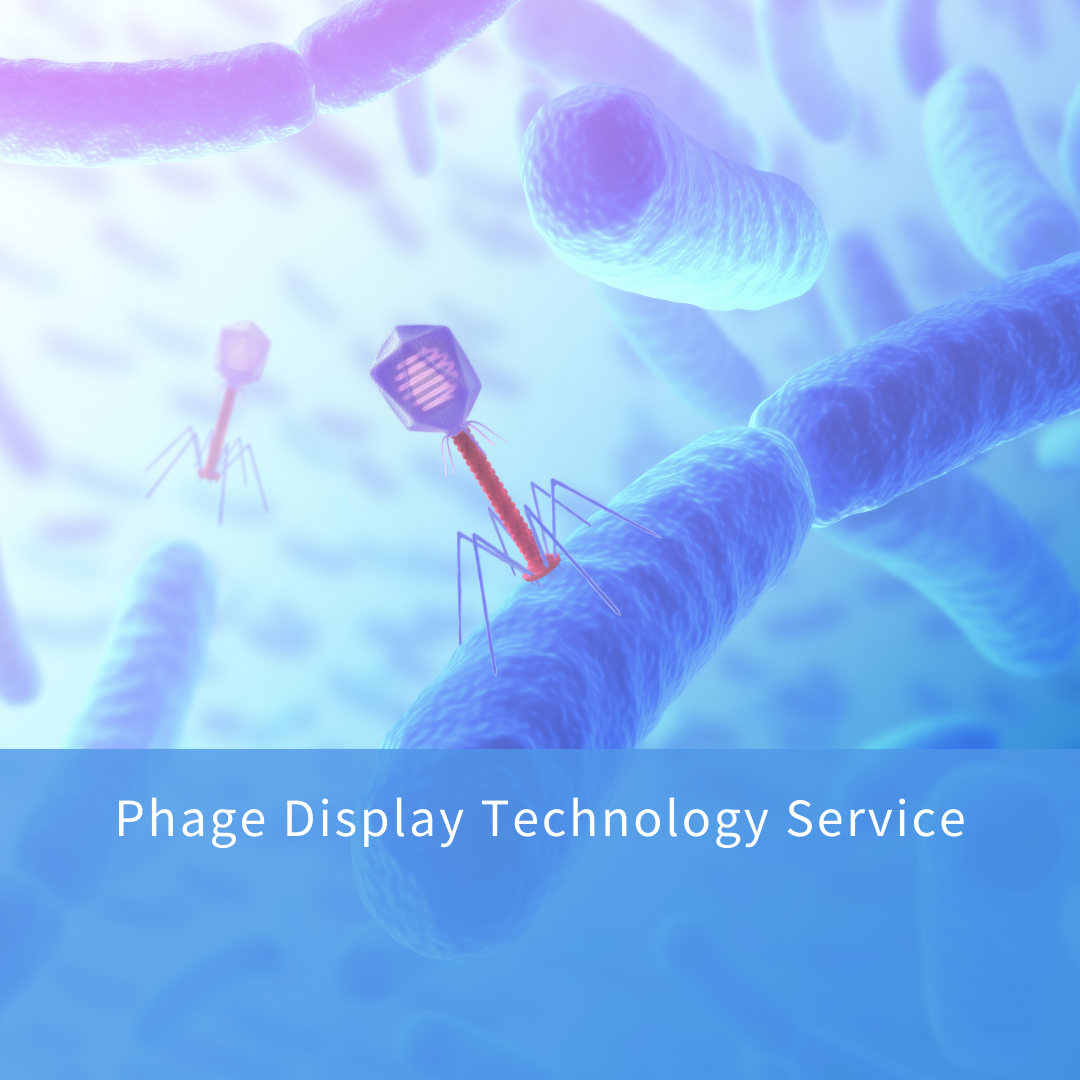
What are Peptide Screening Services? These are specialized contract research services offered by biotech companies and CROs (Contract Research Organizations) to discover, optimize, or validate peptide-based molecules for various applications. They provide the expertise, libraries, and high-throughput technologies to efficiently identify peptide hits from vast molecular collections. Core Types of Peptide Screening Services 1. Library-Based Screening This is the most common starting point for discovery. Synthetic Peptide Libraries: Collections of thousands to millions of chemically synthesized peptides. Positional Scanning Libraries: For epitope mapping or identifying key amino acid residues. Truncation & Alanine Scanning: To find the minimal active sequence and critical residues. Phage Display Libraries: The largest and most diverse format (up to 10^11 unique sequences). A library of bacteriophages, each displaying a unique peptide on its coat protein, is panned against a target (e.g., a protein, cell). mRNA/Ribosome Display Libraries: Cell-free systems that link the peptide to its encoding mRNA, allowing for even larger libraries and easier mutagenesis. 2. Functional & Application-Specific Screening Services are tailored to the desired peptide function: Target-Based Screening: Against purified proteins (e.g., enzymes, receptors, GPCRs, protein-protein interaction interfaces). Cell-Based Screening: For peptides that modulate cell signaling, internalize into cells (CPPs), or have antimicrobial (AMP) or anticancer activity. Antigen/Antibody Screening: For epitope mapping, vaccine development,…

Peptides sit in a sweet spot between small molecules and biologics: they can be engineered for high specificity, tuned with chemical modifications, and explored rapidly through libraries. But peptide screening is not “just HTS with different molecules.” It blends chemistry (library design and synthesis), biology (assay selection and target context), and analytics (MS-based confirmation, binding kinetics, stability, and sometimes regulated bioanalysis). That is why many teams partner with a Contract Research Organization (CRO) for Peptide Screening—to industrialize the workflow from idea → hits → optimized leads, while keeping data quality, reproducibility, and documentation strong. Below is a knowledge-focused overview of what peptide-screening CROs typically do, the major screening technologies, the deliverables you should expect, and the technical “gotchas” that often decide whether a campaign succeeds. 1) What a “CRO for Peptide Screening” actually provides (beyond bench capacity) A peptide-screening CRO usually covers some combination of these pillars: Library strategy + synthesis execution Peptide discovery begins with what you choose to search. Many CROs help design libraries for the biological question (agonist vs antagonist, surface binder vs enzyme substrate, linear vs cyclic peptides, inclusion of non-natural amino acids, etc.), then manufacture the library and track identities and…
SPOT Synthesis (often written as SPOT peptide synthesis or SPOT synthesis technique) is a positionally addressable, parallel solid-phase peptide synthesis method where many peptides are built simultaneously as discrete “spots” on a derivatized cellulose membrane. Instead of synthesizing one peptide at a time on resin beads, SPOT Synthesis dispenses activated amino acid solutions onto predefined membrane coordinates, enabling rapid generation of peptide libraries and arrays for downstream screening.  ⸻ What Makes SPOT Synthesis Unique? 1) Parallel synthesis on a planar cellulose support In SPOT Synthesis, the membrane acts as a flat solid support. Each printed droplet is absorbed into the porous cellulose and behaves like a tiny reaction “micro-compartment,” allowing hundreds to thousands of peptides to be synthesized in parallel on one sheet.  2) Addressable peptide libraries (arrays you can map by position) Every spot corresponds to a known sequence (or sequence mixture), which makes SPOT arrays especially useful when you need systematic coverage—such as scanning a protein sequence with overlapping peptides or exploring sequence–activity relationships.  3) Scale and throughput The method is widely described as supporting very high spot counts (from hundreds up to many thousands, depending on format and spot size). This density makes it…
A peptide library is one of the most powerful resources in molecular biology, drug discovery, and biochemical research. It consists of a large collection of peptides—each with distinct sequences—designed to probe biological targets, identify binding interactions, and accelerate the discovery of functional molecules. As scientific research and pharmaceutical innovation increasingly rely on high-throughput techniques, peptide libraries have become central to understanding protein interactions, enzyme specificity, and therapeutic candidate selection. ⸻ What Is a Peptide Library? A peptide library is a structured set of diverse peptides with systematically varied amino-acid sequences. These peptides are synthesized or expressed in large numbers to explore how different sequences interact with a biological target. Because proteins and enzymes recognize molecules based on their structure and sequence, peptide libraries provide a versatile platform to map these interactions efficiently. Unlike single-peptide investigations, libraries allow the simultaneous evaluation of thousands to millions of peptide variants. This significantly reduces the time required to identify high-affinity binders, active sequences, or inhibitory motifs. ⸻ How Peptide Libraries Are Constructed 1. Solid-Phase Peptide Synthesis (SPPS) Most artificial peptide libraries rely on SPPS, which builds peptides one amino acid at a time. By varying the added amino acids in each step, researchers generate…
Peptide Research Tuscaloosa: High-Purity Custom Peptide Solutions from a China-Based Supplier Serving the USA Peptide research continues to play a central role in biomedical innovation, drug discovery, immunology, diagnostics, and academic biochemistry. In the Tuscaloosa research community—home to growing biotechnology programs, CRO collaborations, and university-driven life-science studies—scientists require reliable and reproducible peptide materials that meet strict purity and analytical standards. KMD Bioscience (selexkmdbio.com) is a China-based peptide synthesis factory and global supplier, providing high-purity research peptides to clients in Tuscaloosa, Alabama, and across the United States. While not locally manufactured in the USA, KMD Bioscience delivers scalable, cost-effective peptide production supported by advanced synthesis technologies and rigorous quality control. This article provides an original, search-optimized overview of peptide applications, product advantages, typical specifications, and why many U.S. laboratories choose international suppliers for research-grade peptides. ⸻ Why Peptide Research Matters in the USA and Tuscaloosa Researchers in Tuscaloosa use peptides across a wide spectrum of applications: 1. Drug Discovery & Therapeutic Development Peptides are attractive drug candidates due to their: •high specificity to molecular receptors •predictable pharmacodynamics •reduced toxicity compared with small molecules Custom peptides allow researchers to explore lead compounds, enzyme substrates, cell-penetrating sequences, and bioactive analogues. 2. Immunology &…
Peptide Library Companies in AL: Why Many U.S. Researchers Choose KMDBioscience.org as Their Trusted Supplier As demand for advanced peptide discovery tools continues to rise across biotechnology hubs in Alabama (AL)—including Birmingham, Huntsville, Mobile, and Auburn—research groups require reliable, cost-efficient, and high-throughput peptide library suppliers. Although there are several research organizations and distributors within the United States, many laboratories now prefer to source peptide libraries directly from specialized international manufacturers with stronger production capabilities. KMDBioscience.org, a China-based professional peptide library factory and global supplier, provides U.S. researchers in Alabama with high-purity, custom-designed peptide libraries at competitive turnaround times. While KMDBioscience.org serves customers in AL and other U.S. states, it is essential to clarify that the company does not manufacture locally in Alabama; instead, all production is carried out in China under strict quality control standards. ⸻ Comprehensive Peptide Library Solutions for AL-Based Research KMDBioscience.org supports diverse research fields, offering flexible peptide library design options suited for protein engineering, immunology, drug discovery, and molecular recognition studies. 1. Custom Peptide Libraries Designed for targeted scientific objectives: •Sequence-defined libraries •Focused structure–activity relationship (SAR) libraries •High-diversity screening libraries •Hotspot and random-mutation peptide series •Modified peptide sets (phosphorylation, acetylation, methylation, and more) These libraries enable…
Peptide Library for Drug Discovery – China Factory & Global Supplier Serving USA | KMDBioScience Advances in drug discovery increasingly rely on fast, systematic screening tools capable of identifying molecular leads with high precision. A Peptide Library has become one of the most efficient platforms for discovering therapeutic candidates, enzyme substrates, receptor ligands, and molecular probes. As a China-based manufacturing factory and professional supplier, KMDBioScience.org provides comprehensive peptide library solutions to research institutions, biotech innovators, and pharmaceutical developers across the United States, supporting both early-stage exploration and late-stage optimization. ⸻ What Is a Peptide Library? A peptide library is a large, diverse collection of synthesized peptides designed to systematically explore biological interactions. Each peptide variant differs by sequence length, amino acid composition, functional modifications, or molecular structure. This controlled diversity allows scientists to identify: •Potential therapeutic leads •Protein–protein interaction modulators •Biomarker candidates •Antigen epitopes •Enzyme activity substrates and inhibitors Peptide libraries are essential tools for high-throughput screening, enabling rapid identification of high-value molecules. ⸻ Types of Peptide Libraries Offered by KMDBioScience KMDBioScience.org manufactures multiple categories of peptide libraries, ensuring flexibility for diverse research needs in USA laboratories: 1. Random Peptide Library Designed for broad screening and unbiased discovery. Useful for…
Peptide Library Screening New Jersey — High-Performance Libraries Supplied by KMDBioScience.org (China-Based Factory Supplier) Researchers across New Jersey increasingly rely on advanced peptide library screening to accelerate discovery in immunology, oncology, drug development, protein–ligand studies, and diagnostic assay innovation. To support this demand, KMDBioScience.org, a China-based professional peptide manufacturing factory and global supplier, provides high-quality custom peptide libraries to universities, biotech firms, and pharmaceutical laboratories throughout the USA. Although KMDBioScience.org is not a New Jersey manufacturer, it supplies specialized peptide screening materials and services directly to NJ-based research teams with stable international delivery and strict quality control. ⸻ What Is Peptide Library Screening? Peptide library screening is a systematic method of testing thousands of peptide variants to identify functional sequences with desirable biological activity. This technique is widely used in: •Epitope identification and vaccine development •Protein–protein interaction studies •Drug lead discovery and binding characterization •Enzyme substrate profiling •Antibody specificity enhancement •Receptor–ligand affinity optimization By analyzing how each peptide interacts with the target molecule, researchers can rapidly map critical motifs, validate binding sites, and pinpoint high-value lead candidates. ⸻ Types of Peptide Libraries Supplied by KMDBioScience.org As a specialized peptide factory located in China, KMDBioScience.org supports New Jersey customers with comprehensive…
Peptide Screening Solutions for Princeton, New Jersey Research Laboratories Researchers and biotechnology companies in Princeton, NJ increasingly rely on advanced peptide-based technologies for drug discovery, molecular targeting, and biomarker identification. To support this demand, KMDBioScience, a professional China-based peptide library supplier and manufacturing factory, provides high-quality Peptide Screening and Peptide Library Screening services to research institutes, pharmaceutical developers, and biotech startups across New Jersey and the United States. Although KMDBioScience operates from China, the company has become a trusted international supplier for U.S. laboratories seeking cost-effective, precise, and large-scale peptide discovery solutions without compromising scientific performance. ⸻ What Is Peptide Library Screening? Peptide library screening refers to the systematic testing of large, diverse peptide collections to identify candidates with desired biological interactions. This method is widely used in: •Drug discovery & target identification •Protein–protein interaction mapping •Receptor binding analysis •Enzyme substrate profiling •Antibody epitope discovery •Diagnostic biomarker development High-throughput screening technologies allow thousands to millions of peptide variations to be evaluated quickly, enabling accelerated research cycles for Princeton-based laboratories working in disciplines such as structural biology, immunology, and precision therapeutics. ⸻ KMDBioScience Peptide Library Capabilities As a dedicated supplier and factory in China, KMDBioScience offers a wide portfolio of customizable…
Peptide Screening NYC: Advanced Manhattan Biotech Peptide Library Support by KMDbioscience (China-Based Supplier) Biotechnology companies, academic laboratories, and drug-development groups in New York and Manhattan increasingly rely on high-quality peptide discovery solutions to accelerate early-stage research. As peptide-based therapeutics and diagnostics gain importance, the demand for high-diversity peptide libraries, fast peptide screening platforms, and reliable structure-activity (SAR) evaluation continues to expand across the U.S. research community. KMDbioscience, a professional peptide library supplier and factory based in China, provides comprehensive peptide screening services to support the needs of NYC-based biotech startups, university labs, CROs, and pharmaceutical innovators. Although the company is located in China, it delivers global supply coverage, enabling New York researchers to access high-precision peptide libraries without confusion about local manufacturing. ⸻ What Is Peptide Screening and Why Is It Critical for NYC Biotech? Peptide screening refers to the systematic evaluation of large synthetic peptide sets to identify candidates with: •High target affinity •Improved selectivity •Optimized stability •Enhanced biological activity •Reduced toxicity This process is essential for Manhattan research groups working in: •Immunotherapy development •Protein–protein interaction modulation •Biomarker identification •Antimicrobial peptide discovery •Diagnostic assay development •Precision medicine research With the rapid expansion of NYC’s biotech sector, researchers require fast,…