

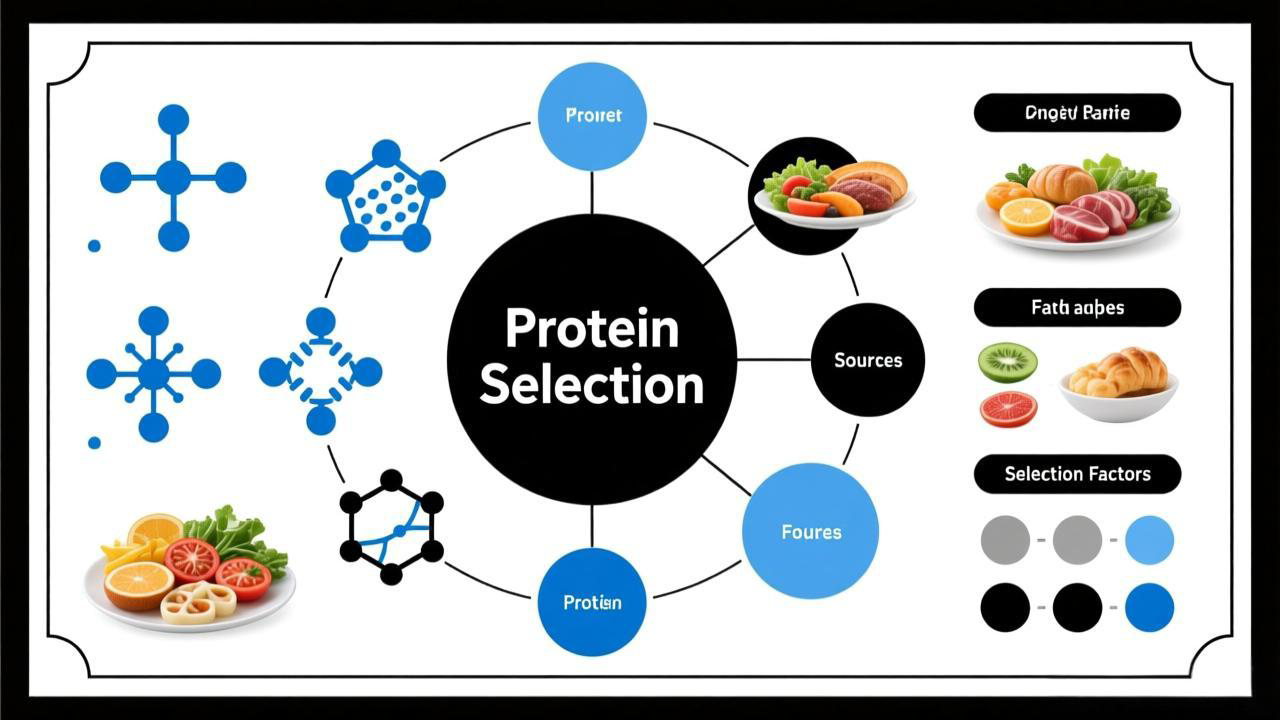
What are Peptide Screening Services? These are specialized contract research services offered by biotech companies and CROs (Contract Research Organizations) to discover, optimize, or validate peptide-based molecules for various applications. They provide the expertise, libraries, and high-throughput technologies to efficiently identify peptide hits from vast molecular collections. Core Types of Peptide Screening Services 1. Library-Based Screening This is the most common starting point for discovery. Synthetic Peptide Libraries: Collections of thousands to millions of chemically synthesized peptides. Positional Scanning Libraries: For epitope mapping or identifying key amino acid residues. Truncation & Alanine Scanning: To find the minimal active sequence and critical residues. Phage Display Libraries: The largest and most diverse format (up to 10^11 unique sequences). A library of bacteriophages, each displaying a unique peptide on its coat protein, is panned against a target (e.g., a protein, cell). mRNA/Ribosome Display Libraries: Cell-free systems that link the peptide to its encoding mRNA, allowing for even larger libraries and easier mutagenesis. 2. Functional & Application-Specific Screening Services are tailored to the desired peptide function: Target-Based Screening: Against purified proteins (e.g., enzymes, receptors, GPCRs, protein-protein interaction interfaces). Cell-Based Screening: For peptides that modulate cell signaling, internalize into cells (CPPs), or have antimicrobial (AMP) or anticancer activity. Antigen/Antibody Screening: For epitope mapping, vaccine development,…
Think of it as a sophisticated, high-throughput search and test process. Instead of you building and running every experiment in your own lab, you outsource the initial heavy lifting to experts with specialized libraries and automated systems. Here’s a detailed breakdown: Core Concept The goal is to sift through vast collections (libraries) of peptides—short chains of amino acids—to find the few that bind to a specific target (like a protein, receptor, or cell), catalyze a reaction, or exhibit a desired function (e.g., antimicrobial activity). Key Components of Peptide Screening Services Peptide Libraries: Synthetic Libraries: Collections of thousands to millions of chemically synthesized peptides. They can be diverse (random sequences) or focused (based on a known protein family or structure). Phage Display / Yeast Display Libraries: Genetic libraries where each peptide is displayed on the surface of a virus (phage) or yeast cell, with its DNA sequence inside. This allows for easy amplification and sequencing of "hits." Screening Assays (The "How"): Binding Screens: The most common. Immobilize your target and see which peptides from the library stick to it. Techniques include ELISA, surface plasmon resonance (SPR), and biopanning (for phage display). Functional Screens: Test for a biological effect, like enzyme inhibition, antimicrobial killing, or cell penetration. High-Throughput Screening (HTS): Automated…

What “Affinity Determination” Means Affinity determination is the process of quantifying how strongly two molecules bind to each other—commonly protein–protein, antibody–antigen, receptor–ligand, or protein–small molecule interactions. In most bioscience and drug discovery contexts, affinity is summarized by the equilibrium dissociation constant (KD): Lower KD = higher affinity (tighter binding). KD is an equilibrium quantity, meaning it reflects the balance between binding and unbinding at steady state. A related way to express the same concept is the association constant (KA), where KA = 1 / KD. The Core Parameters: KD, KA, kon, koff Affinity can be described in two complementary ways: 1) Equilibrium view (how much binds at steady state) KD (M): concentration at which half of binding sites are occupied in a simple 1:1 interaction model. KA (M⁻¹): binding strength as an association constant (inverse of KD). 2) Kinetic view (how fast binding happens) Many instruments determine affinity by measuring rates: kon (M⁻¹·s⁻¹): association/on-rate (how quickly complex forms) koff (s⁻¹): dissociation/off-rate (how quickly complex falls apart) For a 1:1 interaction: KD = koff / kon (at equilibrium). Surface-based biosensors often estimate affinity by extracting these rates from real-time binding curves. Why Affinity Determination…
Expert Aptamer Analysis Services: From Screening to Validation with KMD Bioscience At KMD Bioscience, we specialize in unlocking the power of aptamers—single-stranded DNA or RNA molecules that bind to specific targets with high affinity and specificity. Our comprehensive Aptamer Analysis Services provide end-to-end solutions, guiding your project from initial discovery through rigorous characterization and validation. We empower researchers in therapeutics, diagnostics, and biotechnology with precise, reliable data to accelerate their development pipelines. Why Choose Aptamers? Often termed "chemical antibodies," aptamers offer unique advantages: reversible denaturation, chemical stability, low immunogenicity, and ease of chemical modification. Our services help you leverage these benefits by ensuring you select and characterize the most effective aptamer for your unique application. Our Core Aptamer Analysis Services 1. SELEX (Systematic Evolution of Ligands by Exponential Enrichment) Optimization & Monitoring The journey begins with robust selection. We don’t just perform SELEX; we optimize and monitor it for maximum success. Custom Library Design: Tailored oligonucleotide libraries based on your target’s nature (proteins, small molecules, cells). Process Monitoring: We use qPCR and high-throughput sequencing (HTS) at critical rounds to monitor enrichment, allowing for data-driven decisions to truncate or continue the selection process efficiently. Counter-Selection: Integration of counter-targets to eliminate non-specific binders and enhance specificity from…
Aptamer Characterization Services: Ensuring the Precision and Reliability of Your Aptamer Development At KMD Bioscience, we understand that discovering an aptamer is just the first step. The true journey to a successful diagnostic, therapeutic, or sensor application hinges on rigorous and comprehensive Aptamer Characterization. Our specialized characterization services are designed to transform your promising aptamer sequences into well-understood, reliable, and high-performance molecular tools. We provide the critical data and validation needed to advance your projects with confidence. Why is Aptamer Characterization Essential? Unlike traditional antibodies, aptamers offer unparalleled advantages in stability, manufacturability, and design flexibility. However, to fully leverage these benefits, thorough characterization is non-negotiable. It confirms that the selected aptamer not only binds but does so with the specificity, affinity, and functionality required for your specific application. Our services mitigate risk, save valuable time and resources, and provide the foundational data for regulatory submissions. Our Comprehensive Suite of Characterization Services We employ a multi-faceted approach, utilizing state-of-the-art biophysical and analytical techniques to profile every critical aspect of your aptamer. 1. Affinity & Binding Kinetics Analysis Precise measurement of the binding strength is fundamental. We determine the dissociation constant (K<sub>D</sub>) and analyze real-time interaction kinetics. Primary Platform: Biolayer Interferometry (BLI). This label-free…
Advanced Aptamer Discovery: Counter-SELEX Services by KMD Bioscience At KMD Bioscience, we specialize in pushing the boundaries of molecular recognition. While traditional SELEX (Systematic Evolution of Ligands by EXponential Enrichment) is powerful for isolating aptamers that bind a specific target, many real-world applications require a higher level of specificity. This is where our advanced Counter-SELEX Services become indispensable. The Challenge: Specificity in Complex Environments Aptamers are single-stranded DNA or RNA molecules that bind to a target with high affinity, often compared to antibodies. However, a significant challenge arises when the target of interest has close structural relatives (e.g., a specific protein isoform, a post-translationally modified form, or a small molecule metabolite in a family of similar compounds). Traditional SELEX might yield aptamers that bind promiscuously to the entire family, not just the desired target. This lack of specificity can lead to false positives and unreliable performance in diagnostic or therapeutic settings. Our Solution: The Counter-SELEX Advantage Counter-SELEX is a refined SELEX strategy designed to overcome this hurdle. The core principle is negative selection. During the standard SELEX process, a naïve nucleic acid library is iteratively selected against the target molecule (positive selection). In Counter-SELEX, we introduce crucial negative selection rounds against one or…
Unlock Complex Targets with Our Advanced Toggle SELEX Services At KMD Bioscience, we push the boundaries of aptamer discovery. Traditional SELEX (Systematic Evolution of Ligands by EXponential enrichment) can face challenges with targets that are difficult to immobilize, have low solubility, or require recognition under specific physiological conditions. Our proprietary Toggle SELEX platform provides a powerful, flexible solution to overcome these hurdles and deliver high-affinity, high-specificity aptamers for your most demanding targets. What is Toggle SELEX? Toggle SELEX is an intelligent, counter-selection strategy that evolves aptamers through alternating selection pressures. Instead of selecting solely for binding to your target, the process dynamically toggles between: Positive Selection: Enriching nucleic acid libraries that bind to your primary target. Negative Selection (Counter-Selection): Actively removing sequences that cross-react with closely related molecules, non-target isoforms, or the immobilization matrix itself. This iterative "on/off" selection creates a powerful filtering mechanism, driving the evolution of aptamers with exceptional specificity and minimizing off-target binding. Our Toggle SELEX Advantage: Precision by Design We customize the toggle parameters to fit your exact needs, making it ideal for: Discriminating Between Highly Similar Targets: Isolate aptamers that distinguish between protein family members (e.g., kinase isoforms), mutant vs. wild-type proteins, or phosphorylated vs. non-phosphorylated states. Targeting Membrane Proteins & Complex Antigens: Use cell-based…
Complex Target SELEX Services: Unlocking High-Affinity Aptamers for Advanced Research At KMD Bioscience, we specialize in harnessing the power of Systematic Evolution of Ligands by EXponential enrichment (SELEX) to develop high-specificity aptamers against even the most challenging molecular targets. Our Complex Target SELEX Services are designed for researchers and partners who require precise, reliable, and functional nucleic acid ligands for diagnostics, therapeutics, and cutting-edge research. What is Complex Target SELEX? Traditional SELEX identifies aptamers—single-stranded DNA or RNA oligonucleotides—that bind with high affinity to a target molecule. Complex Target SELEX extends this capability to intricate, multifaceted, or difficult-to-isolate targets, including: Whole Cells (e.g., specific cancer cell lines, bacteria, stem cells) Transmembrane Proteins & Receptors Post-Translationally Modified Proteins Protein Complexes & Aggregates Viruses and Viral Envelope Proteins Small Molecules in Complex Biological Matrices These targets present unique challenges due to their structural heterogeneity, membrane environment, or low abundance. Our advanced SELEX platforms are meticulously optimized to overcome these hurdles. Our Integrated SELEX Technology Platforms We employ a multi-faceted approach to ensure success: Cell-SELEX: For generating aptamers that distinguish specific cell states (healthy vs. diseased, differentiated vs. undifferentiated) based on surface biomarker profiles. Tissue-SELEX: Advanced selection against targets within their native tissue context, preserving critical conformational and spatial information. Toggle-SELEX: Enhances…
Aptamer Screening Services for Multiple Targets At KMD Bioscience, we understand that the future of diagnostics, therapeutics, and targeted research lies in high-affinity, specific molecular recognition. While antibodies have long been the standard, aptamers—often termed "chemical antibodies"—offer a superior, versatile alternative. Our comprehensive Aptamer Screening Services are designed to discover and develop these powerful single-stranded DNA or RNA molecules against a diverse range of your targets. Why Choose Aptamers? Aptamers bind to their targets, from small molecules and proteins to whole cells and viruses, with exceptional specificity and affinity. They offer distinct advantages: High Specificity & Affinity: Selected through an iterative process to precisely recognize unique epitopes. Chemical Stability: Unlike proteins, aptamers are thermally stable and can be easily regenerated. Easy Modification: Simple chemical synthesis allows for easy labeling and conjugation without loss of activity. Low Immunogenicity: Ideal for in vivo therapeutic and diagnostic applications. Our Multi-Target Screening Platform: SELEX Evolved We employ and continuously optimize state-of-the-art SELEX (Systematic Evolution of Ligands by EXponential enrichment) technologies to cater to the unique nature of each target. Our platform is not one-size-fits-all; it is a flexible, sophisticated system capable of handling multiple target types: Protein Targets: For biomarker detection, assay development, and therapeutic blocking. We screen against purified recombinant proteins, complex protein mixtures,…
Aptamer Screening Services: Unlocking Precision with KMD Bioscience At KMD Bioscience, we are at the forefront of molecular innovation, providing cutting-edge aptamer screening services that empower researchers and industries to discover high-affinity, high-specificity nucleic acid ligands for their most challenging targets. What are Aptamers? Aptamers are single-stranded DNA or RNA oligonucleotides that bind to specific target molecules—from small ions and metabolites to proteins and whole cells—with antibody-like precision. Often termed "chemical antibodies," they offer unique advantages: smaller size, superior stability, minimal immunogenicity, and effortless chemical modification. Why Choose KMD Bioscience for Aptamer Development? Our state-of-the-art facility and expert team specialize in the Systematic Evolution of Ligands by Exponential Enrichment (SELEX) process, the gold standard for aptamer selection. We have refined this technology to deliver aptamers with exceptional performance for diagnostics, therapeutics, and targeted delivery applications. Our Comprehensive Service Portfolio Custom SELEX Screening: Target Flexibility: We work with diverse targets including purified proteins, peptides, small molecules, cells, and even complex structures. Advanced Library Design: Utilize naive or customized libraries for optimal starting diversity. Multiple SELEX Platforms: Choose from Magnetic Bead-based SELEX, Capillary Electrophoresis-SELEX (CE-SELEX) for superior stringency, or Cell-SELEX for live cell surface targets. High-Throughput Sequencing & Bioinformatics: Next-Generation Sequencing (NGS) to analyze selection rounds comprehensively. Advanced bioinformatics pipelines to identify enriched sequences, predict…