
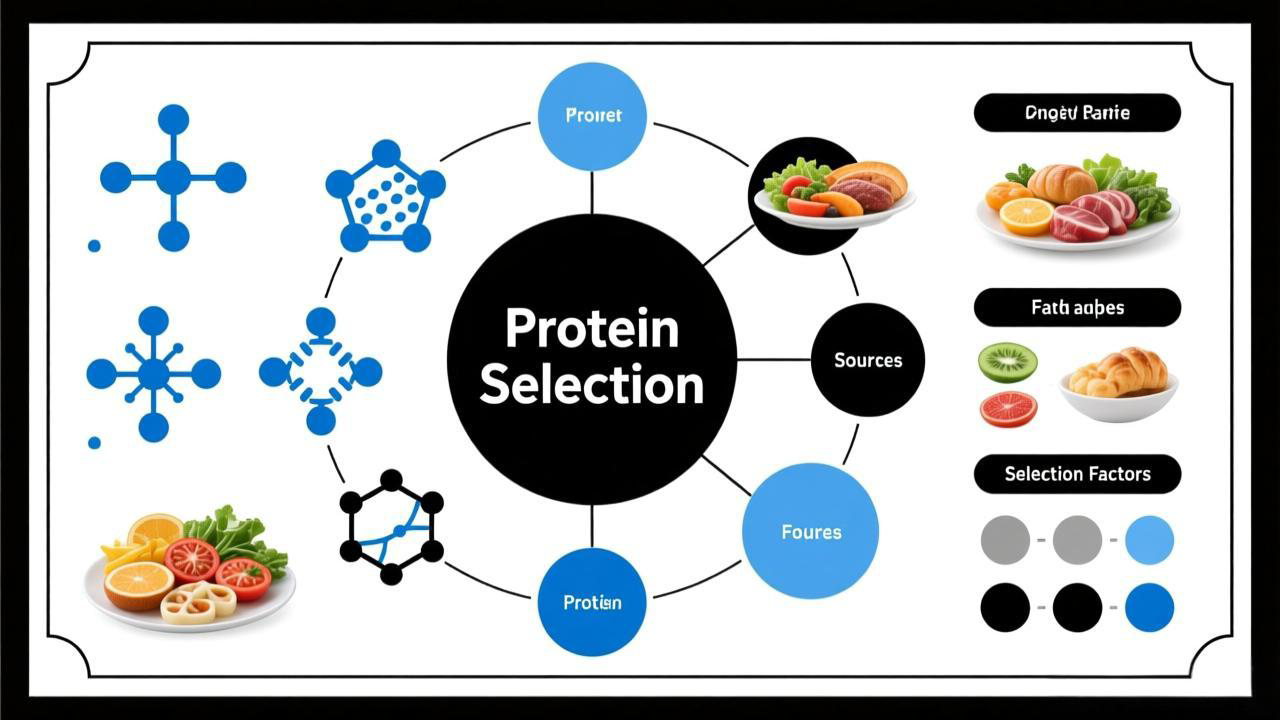
What are Peptide Screening Services? These are specialized contract research services offered by biotech companies and CROs (Contract Research Organizations) to discover, optimize, or validate peptide-based molecules for various applications. They provide the expertise, libraries, and high-throughput technologies to efficiently identify peptide hits from vast molecular collections. Core Types of Peptide Screening Services 1. Library-Based Screening This is the most common starting point for discovery. Synthetic Peptide Libraries: Collections of thousands to millions of chemically synthesized peptides. Positional Scanning Libraries: For epitope mapping or identifying key amino acid residues. Truncation & Alanine Scanning: To find the minimal active sequence and critical residues. Phage Display Libraries: The largest and most diverse format (up to 10^11 unique sequences). A library of bacteriophages, each displaying a unique peptide on its coat protein, is panned against a target (e.g., a protein, cell). mRNA/Ribosome Display Libraries: Cell-free systems that link the peptide to its encoding mRNA, allowing for even larger libraries and easier mutagenesis. 2. Functional & Application-Specific Screening Services are tailored to the desired peptide function: Target-Based Screening: Against purified proteins (e.g., enzymes, receptors, GPCRs, protein-protein interaction interfaces). Cell-Based Screening: For peptides that modulate cell signaling, internalize into cells (CPPs), or have antimicrobial (AMP) or anticancer activity. Antigen/Antibody Screening: For epitope mapping, vaccine development,…
Think of it as a sophisticated, high-throughput search and test process. Instead of you building and running every experiment in your own lab, you outsource the initial heavy lifting to experts with specialized libraries and automated systems. Here’s a detailed breakdown: Core Concept The goal is to sift through vast collections (libraries) of peptides—short chains of amino acids—to find the few that bind to a specific target (like a protein, receptor, or cell), catalyze a reaction, or exhibit a desired function (e.g., antimicrobial activity). Key Components of Peptide Screening Services Peptide Libraries: Synthetic Libraries: Collections of thousands to millions of chemically synthesized peptides. They can be diverse (random sequences) or focused (based on a known protein family or structure). Phage Display / Yeast Display Libraries: Genetic libraries where each peptide is displayed on the surface of a virus (phage) or yeast cell, with its DNA sequence inside. This allows for easy amplification and sequencing of "hits." Screening Assays (The "How"): Binding Screens: The most common. Immobilize your target and see which peptides from the library stick to it. Techniques include ELISA, surface plasmon resonance (SPR), and biopanning (for phage display). Functional Screens: Test for a biological effect, like enzyme inhibition, antimicrobial killing, or cell penetration. High-Throughput Screening (HTS): Automated…

Aptamers are short single-stranded DNA or RNA molecules that fold into 3D structures capable of binding targets (proteins, small molecules, cells, or even complex particles) with high specificity and affinity. “Aptamer methods” usually refers to the full pipeline: library design → selection (SELEX) → enrichment monitoring → sequencing & bioinformatics → candidate optimization → biophysical/functional validation → stability engineering. Modern platforms improve speed and hit quality by combining smarter selection pressures with microfluidics and next-generation sequencing. 1) Core Aptamer Selection Method: SELEX (Systematic Evolution of Ligands by EXponential Enrichment) 1.1 Classical SELEX workflow (baseline method) Start with a random oligonucleotide library (often 10^13–10^15 unique sequences) Incubate library with the target Partition bound vs unbound sequences Elute binders Amplify (PCR for DNA; RT-PCR + transcription for RNA) Repeat iterative rounds with increasing stringency until enrichment is achieved Why it works: each round increases the fraction of sequences that can bind under the imposed conditions (buffer, temperature, competitor molecules, etc.). Why it’s hard: classical SELEX can be slow, labor intensive, and prone to amplification bias—hence the rise of “advanced SELEX” platforms. 1.2 “Stringency engineering” (how you make aptamers useful) Selection success often depends less on the target itself…
What “Affinity Determination” Means Affinity determination is the process of quantifying how strongly two molecules bind to each other—commonly protein–protein, antibody–antigen, receptor–ligand, or protein–small molecule interactions. In most bioscience and drug discovery contexts, affinity is summarized by the equilibrium dissociation constant (KD): Lower KD = higher affinity (tighter binding). KD is an equilibrium quantity, meaning it reflects the balance between binding and unbinding at steady state. A related way to express the same concept is the association constant (KA), where KA = 1 / KD. The Core Parameters: KD, KA, kon, koff Affinity can be described in two complementary ways: 1) Equilibrium view (how much binds at steady state) KD (M): concentration at which half of binding sites are occupied in a simple 1:1 interaction model. KA (M⁻¹): binding strength as an association constant (inverse of KD). 2) Kinetic view (how fast binding happens) Many instruments determine affinity by measuring rates: kon (M⁻¹·s⁻¹): association/on-rate (how quickly complex forms) koff (s⁻¹): dissociation/off-rate (how quickly complex falls apart) For a 1:1 interaction: KD = koff / kon (at equilibrium). Surface-based biosensors often estimate affinity by extracting these rates from real-time binding curves. Why Affinity Determination…
Venture capital interest in AI-driven drug discovery has moved from “promise” to a more disciplined phase of investment & funding. Capital is still available, but it increasingly concentrates in teams and platforms that can prove (1) credible biology, (2) proprietary data advantage, and (3) a realistic path to value creation—whether through licensing, partnerships, or clinical progression. Recent industry tracking highlights a rebound in AI funding within drug R&D and emphasizes that “discovery engines” have captured a significant share of investment attention. This article explains the category in a knowledge-first way: what investors look for, common funding structures, due diligence priorities, and how startups can position themselves to raise responsibly. 1) Why This Category Attracts VC: The Economic Logic of “R&D Compression” Drug discovery is slow, high-attrition, and data-hungry. AI’s venture thesis is not “AI finds drugs automatically,” but that it can compress iteration loops and increase decision quality: Cycle-time reduction: faster design–make–test–analyze loops can reduce time to candidate selection. Higher information density: better prioritization of targets, compounds, or modalities can cut dead ends earlier. Platform scalability: once a system is built, it can (in principle) run multiple programs, partners, or indications. Investment trackers have described renewed…
Expert Aptamer Analysis Services: From Screening to Validation with KMD Bioscience At KMD Bioscience, we specialize in unlocking the power of aptamers—single-stranded DNA or RNA molecules that bind to specific targets with high affinity and specificity. Our comprehensive Aptamer Analysis Services provide end-to-end solutions, guiding your project from initial discovery through rigorous characterization and validation. We empower researchers in therapeutics, diagnostics, and biotechnology with precise, reliable data to accelerate their development pipelines. Why Choose Aptamers? Often termed "chemical antibodies," aptamers offer unique advantages: reversible denaturation, chemical stability, low immunogenicity, and ease of chemical modification. Our services help you leverage these benefits by ensuring you select and characterize the most effective aptamer for your unique application. Our Core Aptamer Analysis Services 1. SELEX (Systematic Evolution of Ligands by Exponential Enrichment) Optimization & Monitoring The journey begins with robust selection. We don’t just perform SELEX; we optimize and monitor it for maximum success. Custom Library Design: Tailored oligonucleotide libraries based on your target’s nature (proteins, small molecules, cells). Process Monitoring: We use qPCR and high-throughput sequencing (HTS) at critical rounds to monitor enrichment, allowing for data-driven decisions to truncate or continue the selection process efficiently. Counter-Selection: Integration of counter-targets to eliminate non-specific binders and enhance specificity from…
Aptamer Characterization Services: Ensuring the Precision and Reliability of Your Aptamer Development At KMD Bioscience, we understand that discovering an aptamer is just the first step. The true journey to a successful diagnostic, therapeutic, or sensor application hinges on rigorous and comprehensive Aptamer Characterization. Our specialized characterization services are designed to transform your promising aptamer sequences into well-understood, reliable, and high-performance molecular tools. We provide the critical data and validation needed to advance your projects with confidence. Why is Aptamer Characterization Essential? Unlike traditional antibodies, aptamers offer unparalleled advantages in stability, manufacturability, and design flexibility. However, to fully leverage these benefits, thorough characterization is non-negotiable. It confirms that the selected aptamer not only binds but does so with the specificity, affinity, and functionality required for your specific application. Our services mitigate risk, save valuable time and resources, and provide the foundational data for regulatory submissions. Our Comprehensive Suite of Characterization Services We employ a multi-faceted approach, utilizing state-of-the-art biophysical and analytical techniques to profile every critical aspect of your aptamer. 1. Affinity & Binding Kinetics Analysis Precise measurement of the binding strength is fundamental. We determine the dissociation constant (K<sub>D</sub>) and analyze real-time interaction kinetics. Primary Platform: Biolayer Interferometry (BLI). This label-free…
Aptamer Optimization Services at KMD Bioscience At KMD Bioscience, we understand that discovering an aptamer is just the first step. The journey from a promising initial sequence to a robust, high-performance molecule ready for real-world applications requires rigorous refinement and enhancement. This is where our specialized Aptamer Optimization Services come into play. We provide a comprehensive suite of strategies to elevate your aptamer candidates, ensuring they meet the highest standards of affinity, specificity, stability, and functionality for your specific needs. Why Optimize Your Aptamers? Initial selections (SELEX) often yield aptamers with potential but suboptimal characteristics. Optimization is crucial to: Enhance Binding Affinity & Specificity: Achieve stronger and more selective target binding, reducing off-target interactions. Improve Stability: Increase resistance to nuclease degradation and thermal denaturation for reliable performance in complex environments (e.g., serum, cellular lysates). Modify Functional Properties: Tailor aptamers for downstream applications such as diagnostics, therapeutics, or imaging. Reduce Length & Cost: Shorten sequences without compromising activity, leading to more economical synthesis. Our Core Optimization Strategies Truncation & Minimization: We systematically analyze the secondary and tertiary structure of your parent aptamer to identify the minimal essential binding region. Removing non-essential nucleotides creates shorter, more cost-effective, and often higher-activity variants. Mutational Analysis & Affinity Maturation: Using site-directed…
Advanced Aptamer Discovery: Counter-SELEX Services by KMD Bioscience At KMD Bioscience, we specialize in pushing the boundaries of molecular recognition. While traditional SELEX (Systematic Evolution of Ligands by EXponential Enrichment) is powerful for isolating aptamers that bind a specific target, many real-world applications require a higher level of specificity. This is where our advanced Counter-SELEX Services become indispensable. The Challenge: Specificity in Complex Environments Aptamers are single-stranded DNA or RNA molecules that bind to a target with high affinity, often compared to antibodies. However, a significant challenge arises when the target of interest has close structural relatives (e.g., a specific protein isoform, a post-translationally modified form, or a small molecule metabolite in a family of similar compounds). Traditional SELEX might yield aptamers that bind promiscuously to the entire family, not just the desired target. This lack of specificity can lead to false positives and unreliable performance in diagnostic or therapeutic settings. Our Solution: The Counter-SELEX Advantage Counter-SELEX is a refined SELEX strategy designed to overcome this hurdle. The core principle is negative selection. During the standard SELEX process, a naïve nucleic acid library is iteratively selected against the target molecule (positive selection). In Counter-SELEX, we introduce crucial negative selection rounds against one or…
Unlock High-Affinity Probes with Subtractive SELEX Services at KMD Bioscience At KMD Bioscience, we specialize in transforming the intricate science of molecular selection into powerful, practical solutions. Our Subtractive SELEX (Systematic Evolution of Ligands by EXponential Enrichment) Services are designed to isolate high-specificity, high-affinity aptamers—single-stranded DNA or RNA molecules—against your most challenging targets. In a landscape crowded with biological noise, our subtractive approach ensures you capture the precise molecular keys you need. What is Subtractive SELEX? Traditional SELEX is a powerful iterative process that selects aptamers from vast random-sequence libraries by binding to a target molecule. However, when the target is complex (like a specific cell type, a post-translationally modified protein, or a rare epitope on a common protein), background binding to similar or related structures can dominate, yielding non-specific aptamers. Subtractive SELEX introduces a critical purification step. Before or during selection against the desired target, the nucleic acid library is pre-incubated with non-target or counter-target structures (e.g., a non-target cell line, a non-modified protein, or a common protein domain). Sequences that bind to these undesired structures are actively removed or "subtracted." The remaining, pre-cleared library is then exposed to the true target of interest. This process dramatically enriches for aptamers that uniquely recognize…