


Aptamers—short, single-stranded DNA or RNA oligonucleotides that fold into target-binding structures—are attractive tools for therapeutics, diagnostics, and biosensing. But one limitation shows up again and again in real-world use: stability. In biological fluids, aptamers can be degraded by nucleases, lose their functional conformation, or get cleared rapidly due to small size. “Enhancing aptamer stability” therefore means engineering aptamers to retain integrity and function under the conditions they must actually operate in—serum, cells, elevated temperatures, long storage, or repeated assay cycles. This article explains the major stability failure modes and the best-established enhancement strategies—organized the way practitioners typically make design decisions. 1) What “Aptamer Stability” Really Means (It’s Not One Thing) When people say “aptamer stability,” they often blend multiple properties: Nuclease stability (biostability): resistance to DNases/RNases in serum, plasma, and tissues. Structural/conformational stability: ability to keep the correct fold that binds the target (especially under ionic changes, crowding, or temperature shifts). Thermal stability: higher melting temperature (Tₘ) and robust folding across a wider temperature range. Circulation stability (pharmacokinetic stability): staying in the bloodstream long enough to matter—often limited by renal filtration for small oligos. Functional stability: maintaining binding affinity/specificity after modifications, storage, repeated use, or immobilization. A…
Negative aptamer selection—often called negative selection or counter-selection—is a deliberate filtering step in SELEX(Systematic Evolution of Ligands by EXponential enrichment) designed to remove sequences that bind to the wrong things. Instead of enriching binders to your intended target, negative selection enriches your final pool for what you actually want in real-world use: high specificity, low background, and minimal cross-reactivity. In modern aptamer discovery, negative selection is not “optional polish.” It is one of the most effective ways to prevent selection artifacts—like aptamers that bind to beads, linkers, tags, surfaces, common matrix components, or closely related off-target molecules—from dominating your pool. 1) What “Negative Aptamer Selection” Means (and Why It Exists) During SELEX, you start with a huge randomized DNA/RNA library and iteratively enrich sequences that bind. The catch is that many sequences bind strongly to unintended components in the experimental system: immobilization substrates (e.g., beads, membranes) affinity tags or capture molecules (e.g., streptavidin–biotin systems) blockers, serum proteins, plastic, or assay buffers structurally similar molecules (analogs) that you must not bind Negative selection introduces a decoy binding step: you expose the library to an unwanted target (or “negative target”), then discard the sequences that bind it and keep…
Aptamers are short, single-stranded nucleic acids—typically ~20–100 nucleotides—that fold into defined 3D shapes and bind targets (proteins, small molecules, ions, cells) with high affinity and specificity. They are often described as “chemical antibodies,” but they behave differently: their binding comes from nucleic-acid folding + surface complementarity, and their performance is tightly linked to sequence chemistry, structure, and degradation pathways. When your core question is “DNA aptamers or RNA aptamers?”, the best answer is not a slogan. It’s a decision based on (1) structural needs, (2) stability environment, (3) manufacturability, (4) modification strategy, and (5) application constraints. 1) The Fundamental Difference: Structural Vocabulary vs Environmental Toughness RNA aptamers: richer folding vocabulary RNA has a 2′-OH group on the ribose, which expands hydrogen-bonding possibilities and supports a larger “structural vocabulary” (hairpins, internal loops, bulges, pseudoknots, complex tertiary contacts). In practice, this often means more diverse and intricate 3D conformations, which can translate into excellent binding performance for some targets. Takeaway: Choose RNA when the target demands highly nuanced shape recognition (e.g., challenging protein surfaces or structured RNA targets). DNA aptamers: generally more chemically stable and simpler DNA lacks the 2′-OH group and is typically more resistant to base-catalyzed…
Aptamers and antibodies are both molecular recognition tools—they bind targets with high specificity and affinity—but they come from very different histories. Antibodies emerged from immunology and serum therapy, while aptamers grew out of in vitro evolution and nucleic-acid chemistry. Understanding their origins helps explain why they behave differently in diagnostics, research, and therapeutics. 1) What Antibodies Are—and Why Their History Matters Antibodies are proteins produced by the immune system that recognize antigens. Their “history” is tightly linked to the birth of modern immunology: early observations that blood serum could protect against infection eventually led to the concept of specific “anti-bodies” as functional components of immunity. Over the 20th century, progress in structural biology and molecular genetics clarified how antibodies achieve both diversity and specificity, culminating in technologies that made antibodies reliable lab and industrial tools. Key turning point: monoclonal antibodies A major leap occurred in the 1970s with the development of methods to produce monoclonal antibodies—antibodies of single, defined specificity that could be generated reproducibly and at scale. This transformed antibodies from biological curiosities into standardized reagents for diagnostics and targeted therapy. 2) What Aptamers Are—and How They Were Discovered Aptamers are short, single-stranded nucleic…
CELL-SELEX (Cell-Based Systematic Evolution of Ligands by EXponential enrichment) is a selection strategy used to discover nucleic-acid aptamers—short single-stranded DNA or RNA molecules that fold into shapes capable of binding cellular targets with high affinity and specificity. What makes CELL-SELEX AND BIOMARKER DISCOVERY such a powerful pairing is that cell-SELEX can enrich binders against native cell-surface features (often membrane proteins, glycoproteins, lipids, or complex epitopes) without needing to know the target in advance. This is especially valuable in biomarker discovery, where the “best” marker may be unknown, heterogeneous, or highly dependent on the cellular context. 1) What CELL-SELEX Is (and Why It Matters for Biomarkers) Traditional SELEX often starts with a purified target (e.g., a recombinant protein). In cell-SELEX, the “target” is a living cell population that represents a phenotype you care about—such as a disease subtype, drug-resistant cells, activated immune cells, or a specific differentiation stage. The selection process enriches aptamers that bind those cells while removing sequences that bind irrelevant or shared features. Why this matters for biomarkers: Native conformation is preserved. Cell-surface proteins keep their natural folding, post-translational modifications, and membrane context—features that can be lost in purified preparations. Unbiased discovery. You can discover binding…
When people search “aptamers vs antibodies”, they usually want a clear answer to one question: which binding reagent is better for my target and my workflow? The honest scientific answer is that aptamers and antibodies solve the same problem (molecular recognition) with very different chemistry, and those differences create predictable trade-offs in performance, manufacturability, and real-world robustness. This article explains those trade-offs in a decision-friendly way—focusing on mechanisms, measurable properties, and typical failure modes—so you can pick the right reagent for diagnostics, biosensing, or therapeutic R&D. What Are Aptamers? Aptamers are short, single-stranded DNA or RNA oligonucleotides that fold into 3D shapes capable of binding a target (proteins, small molecules, cells, even toxic or non-immunogenic targets). They’re usually discovered by SELEX(Systematic Evolution of Ligands by EXponential enrichment), an in vitro selection process that iteratively enriches sequences with the best binding. SELEX in one breath (why it matters) SELEX is essentially “laboratory evolution”: bind → separate → amplify → repeat. Because it’s in vitro, you can design selection pressure to prioritize what you actually need (high salt tolerance, temperature stability, discrimination against look-alike proteins, etc.). What Are Antibodies? Antibodies are proteins produced by immune systems (or…
“Aptamer fields” can be understood as the interconnected research and application areas where aptamers—short, single-stranded DNA or RNA molecules—are designed and used as highly selective binding agents (often described as “chemical antibodies”) for targets ranging from proteins and small molecules to whole cells. This article explains what defines the aptamer fields, how aptamers are created, where they’re used, and what technical trends are shaping the space. 1) What Are Aptamers (and Why They Matter in Aptamer Fields)? Aptamers are typically ~20–100 nucleotides long and fold into 3D structures that bind specific targets with high affinity and specificity. Unlike antibodies (biological proteins), aptamers are nucleic acids, which affects how they are discovered, synthesized, modified, and integrated into devices. Key reasons aptamers have become a “field” rather than a niche tool: Programmability: sequence-controlled design and chemical modification Manufacturability: scalable synthesis routes compared with biological production Versatility: diagnostics, biosensing, therapeutics, imaging, and research reagents 2) The Core Engine: SELEX and How Aptamers Are Discovered Most aptamers are generated using SELEX (Systematic Evolution of Ligands by EXponential enrichment), an iterative in-vitro selection process that enriches sequences that bind a chosen target. In common workflows, a large random library is…
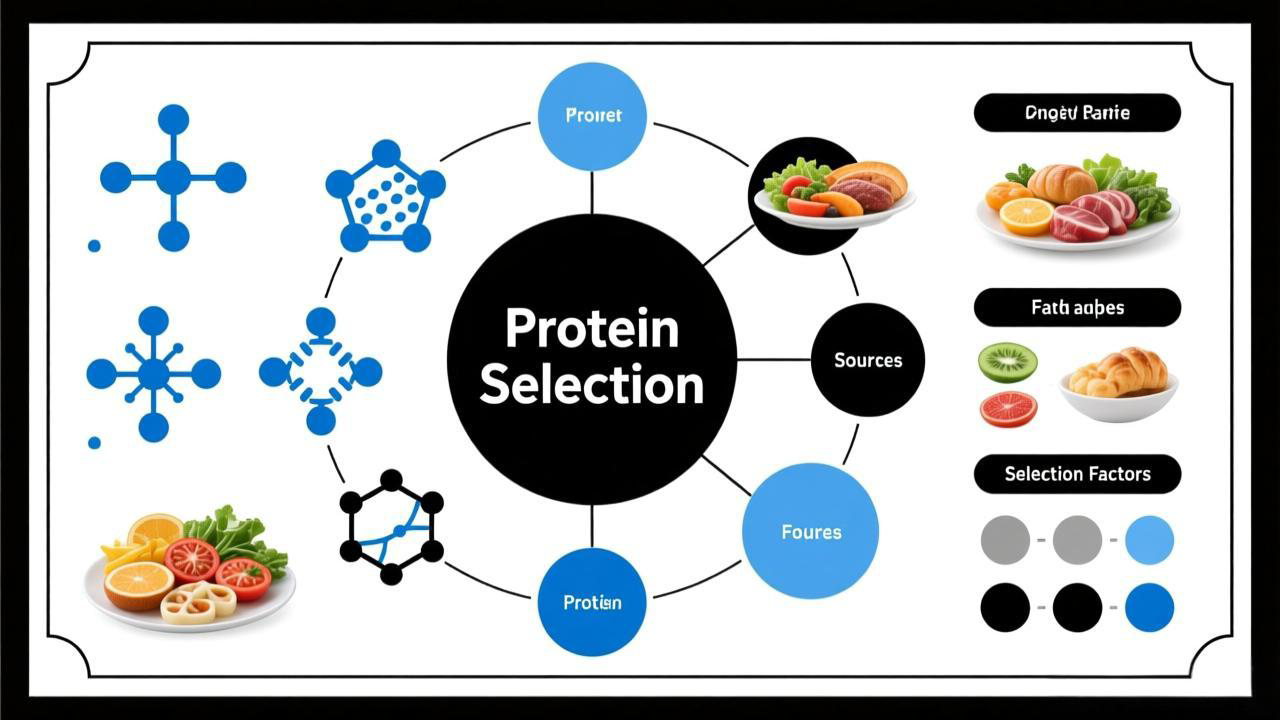
What are Peptide Screening Services? These are specialized contract research services offered by biotech companies and CROs (Contract Research Organizations) to discover, optimize, or validate peptide-based molecules for various applications. They provide the expertise, libraries, and high-throughput technologies to efficiently identify peptide hits from vast molecular collections. Core Types of Peptide Screening Services 1. Library-Based Screening This is the most common starting point for discovery. Synthetic Peptide Libraries: Collections of thousands to millions of chemically synthesized peptides. Positional Scanning Libraries: For epitope mapping or identifying key amino acid residues. Truncation & Alanine Scanning: To find the minimal active sequence and critical residues. Phage Display Libraries: The largest and most diverse format (up to 10^11 unique sequences). A library of bacteriophages, each displaying a unique peptide on its coat protein, is panned against a target (e.g., a protein, cell). mRNA/Ribosome Display Libraries: Cell-free systems that link the peptide to its encoding mRNA, allowing for even larger libraries and easier mutagenesis. 2. Functional & Application-Specific Screening Services are tailored to the desired peptide function: Target-Based Screening: Against purified proteins (e.g., enzymes, receptors, GPCRs, protein-protein interaction interfaces). Cell-Based Screening: For peptides that modulate cell signaling, internalize into cells (CPPs), or have antimicrobial (AMP) or anticancer activity. Antigen/Antibody Screening: For epitope mapping, vaccine development,…
Think of it as a sophisticated, high-throughput search and test process. Instead of you building and running every experiment in your own lab, you outsource the initial heavy lifting to experts with specialized libraries and automated systems. Here’s a detailed breakdown: Core Concept The goal is to sift through vast collections (libraries) of peptides—short chains of amino acids—to find the few that bind to a specific target (like a protein, receptor, or cell), catalyze a reaction, or exhibit a desired function (e.g., antimicrobial activity). Key Components of Peptide Screening Services Peptide Libraries: Synthetic Libraries: Collections of thousands to millions of chemically synthesized peptides. They can be diverse (random sequences) or focused (based on a known protein family or structure). Phage Display / Yeast Display Libraries: Genetic libraries where each peptide is displayed on the surface of a virus (phage) or yeast cell, with its DNA sequence inside. This allows for easy amplification and sequencing of "hits." Screening Assays (The "How"): Binding Screens: The most common. Immobilize your target and see which peptides from the library stick to it. Techniques include ELISA, surface plasmon resonance (SPR), and biopanning (for phage display). Functional Screens: Test for a biological effect, like enzyme inhibition, antimicrobial killing, or cell penetration. High-Throughput Screening (HTS): Automated…
Aptamers are short single-stranded DNA or RNA molecules that fold into 3D structures capable of binding targets (proteins, small molecules, cells, or even complex particles) with high specificity and affinity. “Aptamer methods” usually refers to the full pipeline: library design → selection (SELEX) → enrichment monitoring → sequencing & bioinformatics → candidate optimization → biophysical/functional validation → stability engineering. Modern platforms improve speed and hit quality by combining smarter selection pressures with microfluidics and next-generation sequencing. 1) Core Aptamer Selection Method: SELEX (Systematic Evolution of Ligands by EXponential Enrichment) 1.1 Classical SELEX workflow (baseline method) Start with a random oligonucleotide library (often 10^13–10^15 unique sequences) Incubate library with the target Partition bound vs unbound sequences Elute binders Amplify (PCR for DNA; RT-PCR + transcription for RNA) Repeat iterative rounds with increasing stringency until enrichment is achieved Why it works: each round increases the fraction of sequences that can bind under the imposed conditions (buffer, temperature, competitor molecules, etc.). Why it’s hard: classical SELEX can be slow, labor intensive, and prone to amplification bias—hence the rise of “advanced SELEX” platforms. 1.2 “Stringency engineering” (how you make aptamers useful) Selection success often depends less on the target itself…
