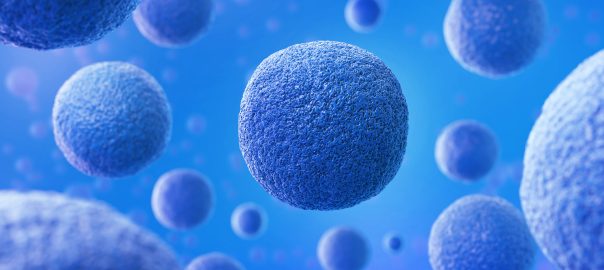
Yeast Display (also called Yeast Surface Display, YSD) is a protein engineering and screening technology that presents peptides or proteins on the outside surface of yeast cells, effectively turning each yeast cell into a “living bead” that physically links a displayed molecule (phenotype) to its encoding DNA inside the cell (genotype). This makes it especially powerful for building and screening peptide libraries to discover binders, optimize affinity, and study molecular interactions.
In yeast display, researchers genetically fuse a peptide (or protein) to a yeast surface-anchor system so that the peptide is exported through the secretory pathway and tethered to the cell wall. A classic and widely used anchoring strategy in Saccharomyces cerevisiae is the Aga1p–Aga2p system, where a fusion partner (often Aga2p) helps attach the displayed peptide to the cell surface, while the encoding plasmid remains inside the same cell. This one-cell-one-variant format is what makes library screening so efficient.
Yeast is a eukaryote, so it can support more complex folding and quality control than many prokaryotic systems. For many peptide/protein scaffolds, this can translate into improved display of properly folded structures and better compatibility with downstream engineering goals (especially when moving toward eukaryotic expression contexts).
At the same time, yeast display is not “limitless.” Reviews commonly note a tradeoff: library size can be smaller than some other display platforms, and expression of certain heterologous proteins may be less efficient depending on sequence and secretion constraints.
A peptide library in yeast display is typically assembled around three conceptual layers:
Random peptide libraries (broad exploration)
Targeted/biased libraries (focused around motifs, hotspots, or known binders)
Affinity maturation libraries (systematic mutation around candidate hits)
The goal is to encode many peptide variants as DNA, so that each yeast cell displays a unique peptide sequence.
The peptide gene is fused to a surface-display construct, then transformed into yeast. Only variants that successfully express and display can be meaningfully screened—so display efficiency becomes part of selection pressure.
Selections often progress from broad enrichment to high-precision sorting:
Early rounds can use capture/enrichment approaches.
Later rounds frequently use fluorescence-activated cell sorting (FACS) to isolate cells showing both strong target binding and adequate display level—an important feature of yeast display because you can measure multiple fluorescent signals at once (e.g., expression tag + binding).
A key reason yeast display is so popular is the ability to do quantitative, multi-parameter screening at the single-cell level. Conceptually, you can:
Gate for “cells that are truly displaying something,” then
Within that gate, enrich for “cells that bind target strongly,” and even
Tune conditions to bias toward desired properties (apparent affinity, specificity, stability proxies under stress, etc.).
This is especially useful for deep mining of a keyword’s knowledge space: it connects library diversity, expression, binding, and iterative optimization into one coherent platform.
While peptide-library screening is a core use, yeast display also supports broader protein engineering goals:
Directed evolution and iterative improvement of binders
Antibody discovery and affinity maturation workflows (a closely related application area often used to illustrate platform strengths)
Studying protein–protein interactions and engineering stability or specificity
Yeast display is powerful, but realistic science requires acknowledging constraints often highlighted in reviews:
Library size ceiling relative to some alternative display systems
Secretion/display bottlenecks for certain sequences (misfolding, processing, glycosylation-related effects depending on protein type)
Potential selection bias toward variants that display well rather than those that are intrinsically best binders in a different expression context
In practice, these limitations shape how libraries are designed (smarter diversity) and how selection pressures are staged (expression gating early, functional pressure later).
Peptide Screening Services
What are Peptide Screening Services?

APTAMER METHODS: Modern Selection, Optimization, and Validation Workflows
Aptamer Applications: A Practical, Science-First Guide to Where Aptamers Create Real Value
Isothermal Titration Calorimetry (ITC) Binding Services: A Practical, Science-First Guide to Label-Free Interaction Thermodynamics
Custom Cell Culture Services: A Practical, Science-First Guide to Outsourced Cell Culture
CATALOG APTAMERS & REAGENTS: A Practical, Science-First Guide to What They Are and How to Choose Them
Bioinformatics for Aptamer Selection: A Modern Guide to Data-Driven SELEX
Custom Aptamer Discovery & Development: A Practical, Science-First Guide from Target Definition to Validated Candidates
Completion of SELEX: What It Means, How to Recognize It, and What Happens Next
SELEX Aptamer Selection: A Practical, Science-First Guide to How Aptamers Are Discovered and Optimized
Diagnostics and Therapeutics: A Practical, Knowledge-Driven Guide to How Modern Medicine Detects and Treats Disease
Toggle-SELEX Aptamer Screening Service
Negative Aptamer Selection- A Practical Guide to Improving Aptamer Specificity in SELEX

selexkmdbio-Cell Nucleic Acid Aptamer Screening Service
Aptamer Screening- Current Methods and Future Trend towards Non-SELEX Approach

Aptamer Screening Service-Subtractive SELEX

Aptamer Screening Service-Counter SELEX
Aptamer Screening Service-HT-SELEX
Aptamer Screening Service-NGS-SELEX

Aptamer Screening Service-Multi-Round SELEX Screening
Whole Cell-SELEX Aptamer Screening Service
Membrane Protein Aptamer Screening Service
Aptamer Screening Service for Drug Discovery
Aptamer Live Cell SELEX Service
Classical SELEX Service for Aptamer
Aptamer Selection and Identification
Aptamer Screening Process and Applications Overview